griffinoyqx759.rivetgarden.com

Validated > 99% Lab-grade Peptides
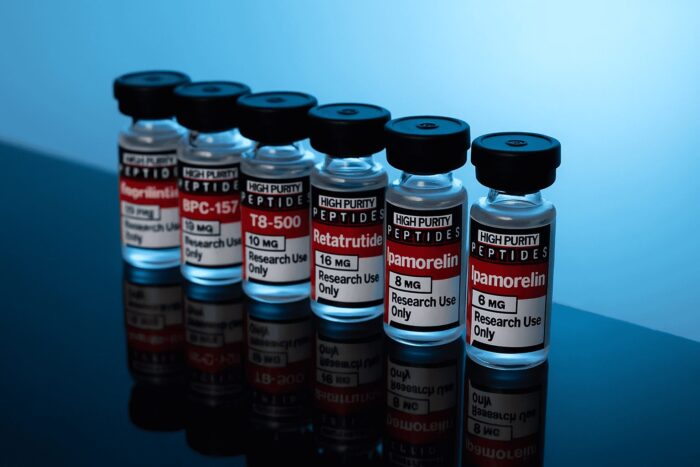
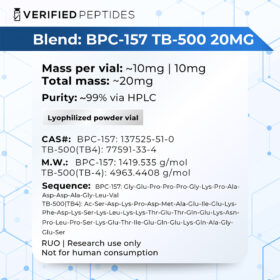
Just How To Validate Research Peptide Pureness: Coa & Hplc Lab Guide Identification verification verifies the details secretagogue being studied. Peptides like BPC-157 and TB-500 made use of for injury recuperation applications ought to get complete confirmation. Identification confirmation is essential since substitution with various substances would basically alter the study strategy. The testing process involves details steps to guarantee accurate outcomes and appropriate sample handling. For these high-stakes circumstances, the cost of screening is insignificant compared to prospective repercussions of utilizing unproven items. For scientists complying with procedures from resources like the BPC-157 and TB-500 stacking overview, verified item high quality makes sure the method receives a reasonable evaluation. Peptide Examination is a US-based lab offering HPLC and UV analysis for peptide confirmation. The laboratory stresses reliable example handling and precision in peptide evaluation. The supplier score system aggregates examining outcomes, enabling scientists to compare top quality patterns across various distributors.

Does A Higher Pureness Percentage Always Imply Better Top Quality?

What device is made use of to examine peptide purity?

Peptide pureness is consistently determined by HPLC (high performance liquid chromatography). This technique allows separation and loved one metrology of each peptide synthesized. If coupled to a mass spectrometer (MS), this gives molecular mass/ identity info of the target peptide and coming with contaminations.

These fragments are generally smaller sized than the target peptide and might elute at various retention times. HPLC can reveal the visibility of additional optimals; LC-MS can assist appoint likely identifications to Discover more here those associated types. Amino acid analysis or various other measurable strategies can support absolute web content. Chiral methods can attend to enantiomeric purity where stereochemistry is a problem. Residual-solvent or water-content examinations can matter in manufacturing or security contexts. These are beneficial in the best setup, but they must be taken method-specific proof instead than an universal replacement for HPLC and MS.

Quality Assurance For Scientists: Why It Starts With Validation

When assessing a COA, researchers need to try to find the adhering to details. A strong peptide testing process makes use of approaches that respond to corresponding concerns. The table listed below is the sensible way to think about usual examinations when reviewing a peptide COA. Validates the exact molecular weight and confirms the peptide's identification. At Maxed Out Compounds, every item we supply features a clear screening record and clear documentation. Our mission is to sustain scientists with high-purity, confirmed substances that satisfy the demands of contemporary clinical research study-- nothing even more, absolutely nothing much less.
  • Paperwork openness remains a vital aspect throughout distributor evaluation.
  • " Together they supply more powerful batch-level proof than either technique alone.
  • For a comprehensive supplier evaluation structure past COA evaluation, see our overview on how to pick a trusted research study peptide distributor and our write-up on warnings from undependable peptide vendors.
  • Trustworthy peptide providers constantly mark their products this way and supply quality reports with HPLC and MS data to back up the pureness level.
  • Peptide pureness screening is the process of validating that a peptide example contains just the intended series-- and no significant contaminants or results from synthesis.
Its area relative to complete peak location determines the reported purity portion. A peptide missing one amino acid could show up 99% pure on HPLC due to the fact that the abbreviated version is still the dominant species. This is why HPLC alone isn't enough for total verification. Smaller sized heights suggest pollutants, which could include abbreviated sequences, removal series, or destruction items. Using a highly cleansed peptide decreases these dangers and boosts the reliability of your data. Nevertheless, accomplishing ultra-high pureness (state 99%) can be practically tough and may not always be essential, as we'll go over later on. The secret is understanding what degree of pureness suffices for your needs and how purity is established to begin with.

Supplier Qualification Procedure

BOC Sciences provides multi-batch comparison evaluation to aid clients establish basic material top quality standards and ensure uniformity. High-Performance Click here for info Fluid Chromatography, or HPLC, is a research laboratory screening approach utilized to make certain a peptide is tidy, pure, and specifically what it claims to be. When peptides like BPC-157 or SS-31 are made, HPLC is among the most crucial devices researchers utilize to confirm their high quality. Importantly, this pureness number is commonly figured out after purification (e.g. by HPLC) and concentrates on peptide impurities-- it does not count residual water, salts, or counter-ions in the dried peptide powder. Simply put, the pureness percent has to do with the make-up of peptide types in the example, not the weight payment of water or salts. If you have actually ever acquired a synthetic peptide for a laboratory experiment, you've likely noticed a pureness portion on the certification of evaluation-- generally worths like 95%, 98%, or perhaps 99%. Peptide purity is a crucial high quality metric that tells you what fraction of a peptide sample is the designated product versus unwanted by-products. In simple terms, a peptide listed as 95% pure is composed primarily of the target peptide (95%), with the staying ~ 5% made up of contaminations. These contaminations can consist of things like reduced or trimmed series, deletion versions, oxidized residues, or various other small side-products from the synthesis process.